WHAT YOU WON’T DO FOR LOVE: The Story of Bobby Caldwell
Mustafa Ali-Smith (right), co-founder of Cue the Record alongside co-host Travis Lee (left). Photograph by Adrian Lewis.
There is a story about the night Bobby Caldwell first played for a Black audience that tells you everything you need to know about what music can do when it stops caring about the body it comes from.
It was Cleveland, Ohio. A warm amphitheater night, 7,000 people packed in to see Natalie Cole and her opening act — a new artist named Bobby Caldwell, whose voice had been burning up R&B radio for weeks. The crowd knew his song by heart. They did not know his face. When the lights came up and a white man walked to the microphone, the room went still. "You could hear a pin drop," Caldwell later recalled. "It was like, What the f** is this?!*"
He played anyway. He kept going. And after about ten minutes, he had them.
"That was the night I became a man," he said.
Robert Hunter Caldwell was born on August 15, 1951, in Manhattan, into a household soaked in music. His parents hosted Suppertime, one of the earliest musical variety programs on television. The soundtrack of his childhood was Frank Sinatra, Nat King Cole, Tony Bennett, and the Beatles,
The family moved to Florida, and Miami became his other great teacher. In Caldwell's own words, the city was a musical "dumping ground" — a place where Haitian, Latin, Caribbean reggae, and American R&B sounds all crashed into each other and fused into something new. He started playing piano and guitar at twelve. By fourteen, he was performing professionally with rock groups across the state. He was a quick study, a fast hand, a kid who absorbed everything.
His first big break arrived through the back door, as first breaks usually do. Caldwell and his band had traveled to Los Angeles to back up Little Richard. Richard fired his existing band on the spot and hired Caldwell's crew instead, after catching them during a Florida tour stop and deciding they were exactly what he needed. Caldwell spent his early twenties as a rhythm guitarist behind one of the original architects of rock and roll.
It was a hell of a starting point. It still didn't get him a record deal.
Photography by Adrian Lewis
What followed was the kind of decade-eating grind that most people's music careers never survive. Caldwell kicked around Los Angeles for six years — bar gigs, sessions, a disco-tinged solo single that went nowhere, one label conversation after another that ended in polite rejection. He was talented, he was persistent, and none of it was working. "I just could not make it happen," he said later. "I basically ended up going back home with my tail between my legs to Miami, feeling pretty despondent." He was twenty-six years old, essentially broke, sleeping in his parents' house. A lot of stories end there.
The turning point arrived in the form of a Miami Herald. Caldwell's mother, watching her son mope around the family home, passed him an issue of the paper. On the cover: a photograph of KC and the Sunshine Band beneath the headline Miami's Favorite Sons. She suggested her son go check out TK Records, the independent Miami label behind KC's rise. He went. Two days later, he had a record deal.
TK was one of the great disco-era labels — a barnstorming independent run by industry veteran Henry Stone that had charted constantly through the mid-1970s with KC and the Sunshine Band, Anita Ward, George McCrae, and others. But by 1977, Stone could feel the cultural weather changing. The country was going disco-weary. He had watched Boz Scaggs score a massive crossover hit with "Lowdown" in 1976 — polished, sophisticated, soulful without being a dance record — and he wanted something like that for TK.
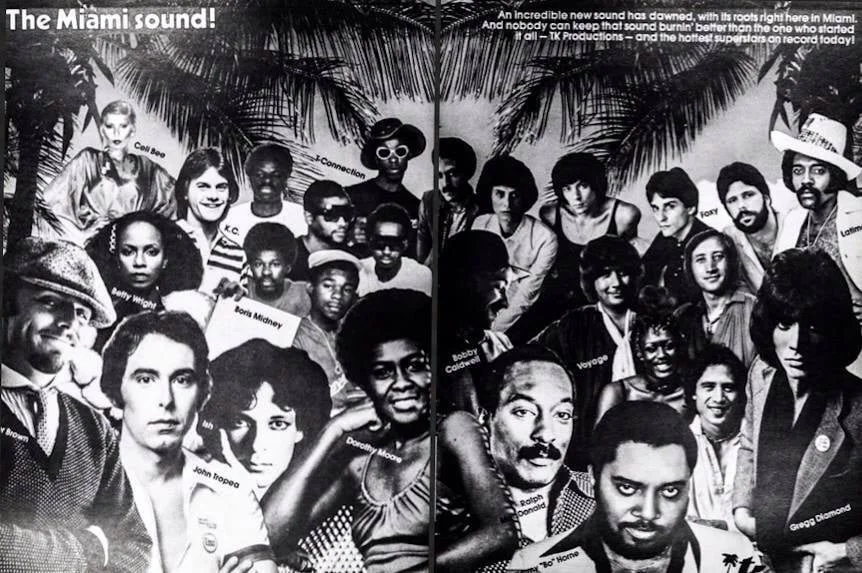
Vintage magazine featuring TK records artists.
Caldwell walked in at exactly the right moment. "People were going disco weary," he said. "I think they saw me as their guy to usher in something with more of a pop approach to R&B music, without the pounding of a kick drum and the nonsensical disco lyrics. They wanted something that was more art than dance."
TK signed Caldwell to Clouds, one of its subsidiary labels, on a two-record deal — a significant vote of confidence in an unproven solo act — and gave him the run of the studio at TK's facility in Hialeah, just outside Miami.
What happened over the next ten months was remarkable for reasons that extended well beyond the music itself. The album was produced primarily by Ann Holloway, with Marsha Radcliffe producing two tracks and bassist George "Chocolate" Perry handling a third — a women-led creative effort in an industry that, at the time, handed production credits almost exclusively to men like Stevie Wonder and Quincy Jones. The structural oddity of the whole situation — a white rock-circuit veteran, signed to a Black R&B label, making polished soul music under the direction of women producers — was either completely invisible to everyone involved, or exactly the kind of irrelevance that good music tends to expose.
Caldwell played nearly everything himself: lead vocals, keyboards, synthesizers, guitars, and bass. Drummer Ed Green, bassist George Perry, and keyboardist Benny Latimore rounded out a tight rhythm section. Miami arranger Mike Lewis handled the horns and strings.
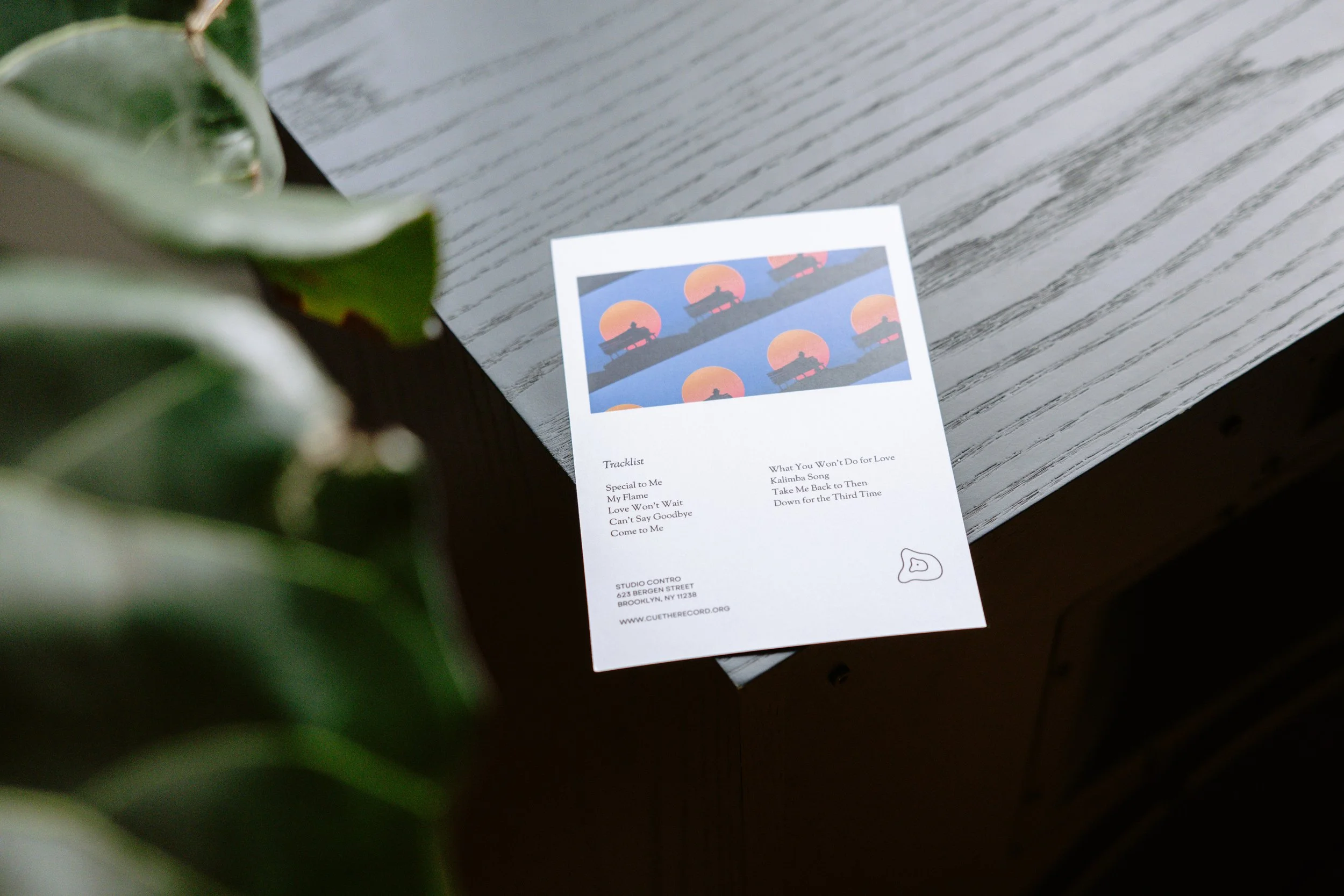
The album came together well. Caldwell had written a set of songs — "Special to Me," "My Flame," "Love Won't Wait," "Can't Say Goodbye," "Come to Me" — that felt sophisticated and warm, soulful but controlled. He was particularly proud of "My Flame," the track he was certain would be his breakout hit. He wanted it sixth on the record, assuming it would be the deep cut everyone discovered. Then TK listened to the final mixes and told him he didn't have a hit. He was sent back into the studio.
In short order, Caldwell wrote and recorded "What You Won't Do for Love" — a jazzy, four-chord progression in F-sharp minor, one of music's more melancholy keys, draped in Mike Lewis's horn arrangement and floating on a loping, unhurried groove. He played keyboards and bass himself. He thought it was fine. He figured it would be the last track on the record. TK thought otherwise. And TK was right.
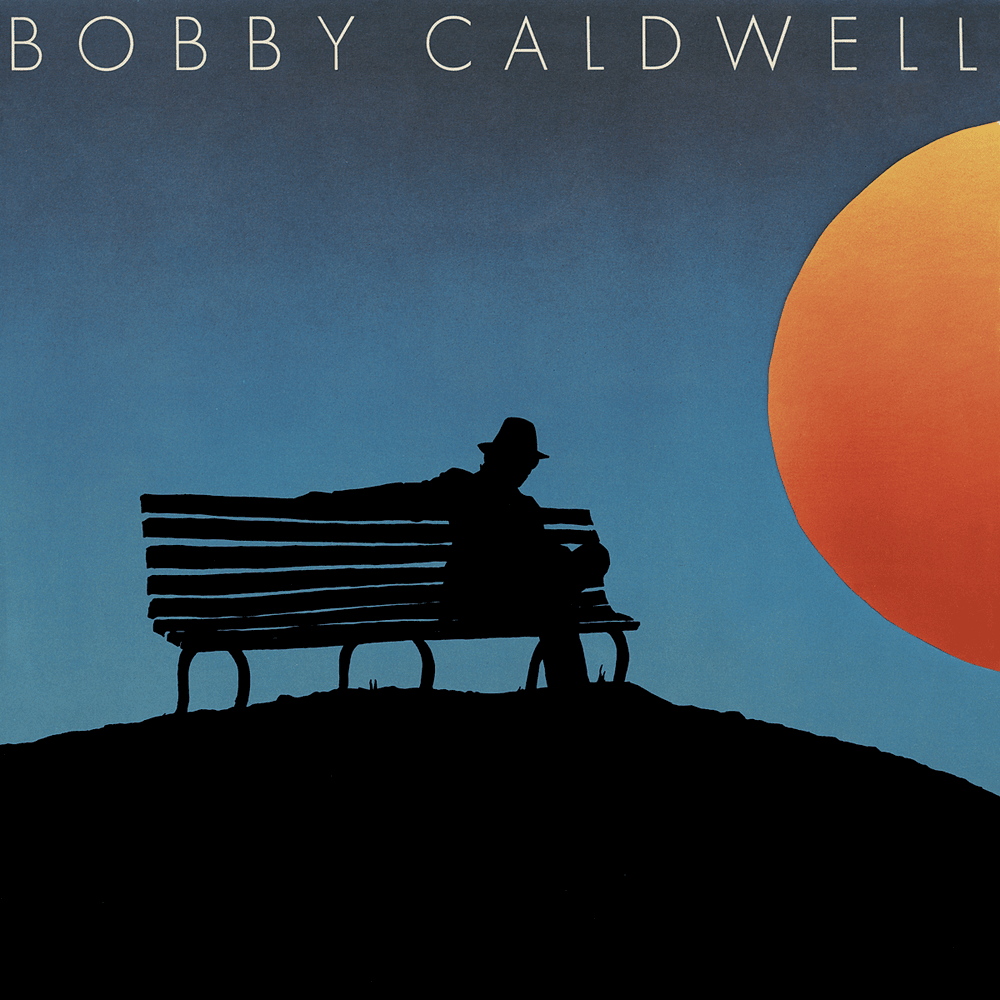
Bobby Caldwell (1978) album cover
The album's cover came from a now-famous act of reverse engineering. TK's entire business model ran on Black radio. That format had been TK's most reliable distribution network — the channel through which KC and the Sunshine Band and everyone else had broken. Without it, a record could die in the crates. The problem, stated plainly: Bobby Caldwell was about as white as a person could look. "They got skittish with going to Black radio with somebody who was whiter than a loaf of bread," Caldwell later admitted.
The solution was his own idea, not the label's. The popular version of the story — that TK executives cooked up the silhouette scheme to deliberately pass Caldwell as Black — is a myth that Caldwell himself has corrected. "It was me who came up with the idea of a silhouette, which I actually drew," he said. Working from a photograph of himself on a bench, he placed a piece of acetate over it, traced his outline, and filled it in. A shadow figure. Racially neutral. Atmospheric. Cool.
The result was one of the most memorable album covers of the era — a lone figure seated on a park bench, rendered entirely in darkness, surrounded by absence. It looked like an album that contained secrets. The silhouette earned Caldwell the nickname "The Stick Man," and his management leaned into the ambiguity, keeping him in shadow in all promotional materials. The reveal, when it came, was not a planned marketing event.
The promotional campaign was methodical and effective. Caldwell's manager Henry Marx threw serious resources at radio, and TK ran its usual playbook: break the song on Black radio, build an R&B fanbase, let it cross over from there. It was the same approach that had worked for KC, for George McCrae, for everyone else on the roster.
It worked again. "What You Won't Do for Love" debuted on the Billboard Hot 100 on December 23, 1978. It spent three weeks at number nine during a twenty-week run. It reached number six on the Hot Rhythm & Blues Singles chart over a twenty-three-week run. It hit number ten on the Easy Listening chart. The album eventually certified two-times platinum in the United States and gold in Japan.
For Valentine's Day 1979, the label pressed 50,000 copies of the single on red, heart-shaped vinyl — "the single that gets to the heart of the matter" — retailing at $7.98, roughly the price of a full LP. The heart-shaped 45 became a collector's item almost immediately. The grooves, practically speaking, were round; the shape was pure romance.
Frankie Crocker, the legendary DJ at WBLS in New York who had broken the song on the air, reportedly didn't know Caldwell was white until after the record was already a hit. When he found out, he announced it over the radio like a news bulletin. The reaction from the R&B community, Caldwell would later say with evident gratitude, was not betrayal. "They took the idea that music has no color."
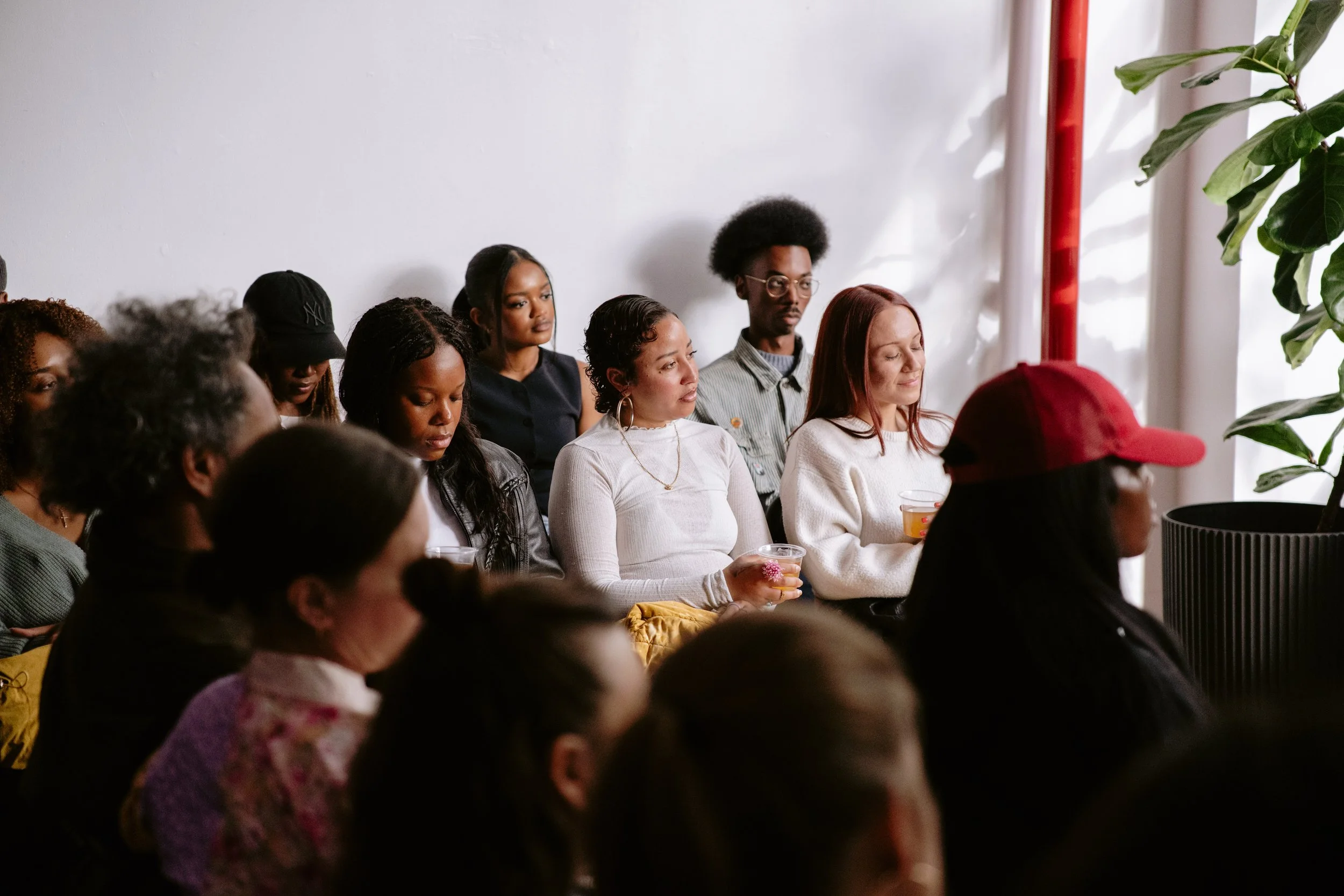
The audience during Cue the Record’s listing session of Bobby Caldwell. Photograph by Adrian Lewis