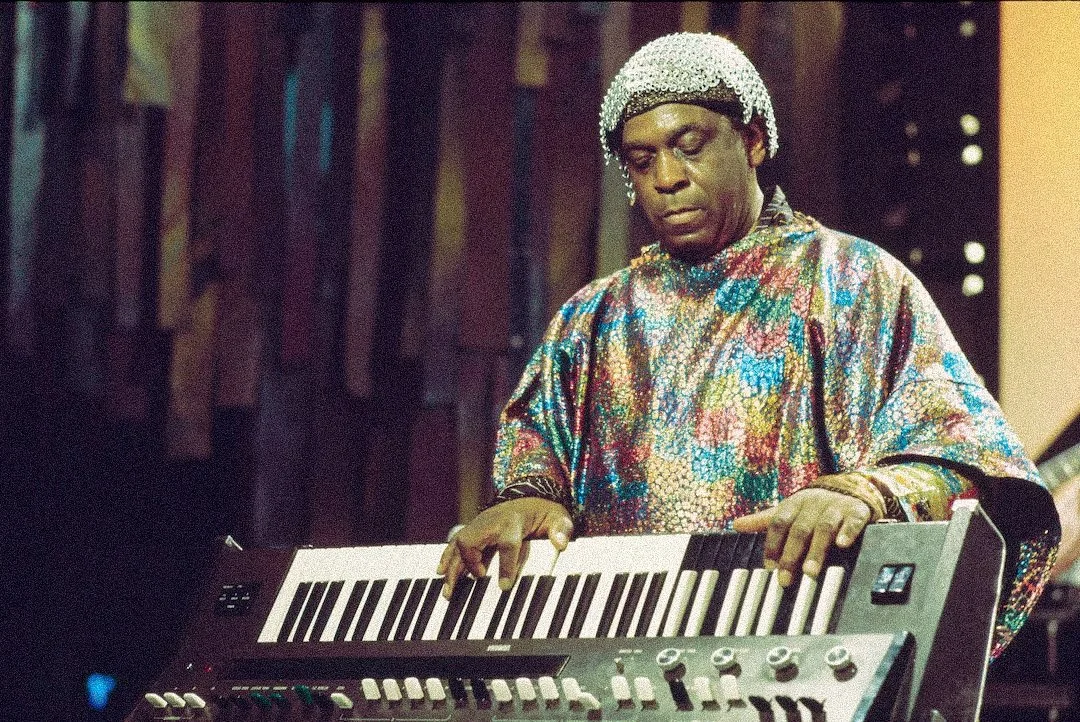
There are musicians who push boundaries, and then there's Sun Ra — an artist who acted like boundaries didn't exist in the first place. The new American Masters documentary Sun Ra: Do The Impossible digs into the life and legacy of one of the most visionary, unconventional, and flat-out otherworldly figures in the history of American music.
Born Herman Poole Blount in Birmingham, Alabama in 1914, Sun Ra showed early signs of being something different. A piano prodigy from a young age, he described a transformative experience as a young man in which he was transported to Saturn and given a calling — to pursue music as a cosmic mission. Whether you take that literally or metaphorically, what followed was one of the most singular careers in jazz history.
Moving through swing, bebop, and free jazz, Sun Ra refused to be boxed in by genre or era. He developed a sound that was entirely his own — avant-garde, experimental, and endlessly evolving — built around his long-running collective, the Arkestra. Over the course of his career he self-produced more than 200 records and wrote over 1,000 compositions, ranging from barrelhouse blues and big band swing all the way to electronic experimental music. He was also a pioneer in the use of electronic keyboards, and among the first Black artists to own and operate his own record label.
In 1952, deepening his studies of ancient Egypt and captivated by the dawn of the Space Age, he legally changed his name to Le Sony'r Ra — Sun Ra for short. The name captured everything he was building: a mythology, a philosophy, a spiritual vision of a Black Space Age that wove together interstellar metaphors, Egyptian symbolism, and a fierce belief in the transformative power of music. His live shows became legendary — elaborate road shows with the full Arkestra that blended music, dance, elaborate costumes, and pure theatrics into something audiences had never seen before and haven't quite seen since. He called them sonic rituals, and that's exactly what they were.
The documentary traces Sun Ra's journey from Birmingham through the cities where his sound took shape — Chicago, New York, Berkeley, and Philadelphia — capturing how he built the Arkestra into both a band and a way of life for its members. Featuring archival footage, rare stills, and performance clips, the film is a kaleidoscopic portrait of an artist who was always ten steps ahead of the moment he was living in.
Central to the film are interviews with longtime Arkestra members including Marshall Allen, Ahmed Abdullah, Cheryl Banks-Smith, and Michael Ray, who offer firsthand accounts of what it meant to be inside Sun Ra's world. Scholars and music experts like King Britt, Harmony Holiday, Fred Moten, and Thomas Stanley help connect the dots between Sun Ra's vision and the broader cultural movements he helped spark.
Chief among those movements is Afrofuturism — the creative and intellectual framework that centers Black identity within science fiction, technology, and speculative thought. Sun Ra is widely regarded as its Godfather, and his influence can be heard and felt across generations of artists. Janelle Monáe, Solange, Flying Lotus, Madlib, and George Clinton have all cited his work as a touchstone. He wasn't just ahead of his time — he was building a future that the culture is still catching up to.
Sun Ra departed Earth, as his followers would say, at the age of 79, passing away in his hometown of Birmingham, Alabama. But the music never stopped. The Sun Ra Arkestra continues to perform to this day under the leadership of Marshall Allen — who, at 101 years old, is still at the helm — alongside Knoel Scott. The band carries the cosmic torch forward, introducing new audiences to Sun Ra's singular brand of jazz with every performance.
Sun Ra: Do The Impossible was directed by Christine Turner, whose previous work includes the Academy Award-nominated documentary The Barber of Little Rock. The film is an American Masters co-production with Firelight Media and premiered nationwide on PBS on February 20, 2025.