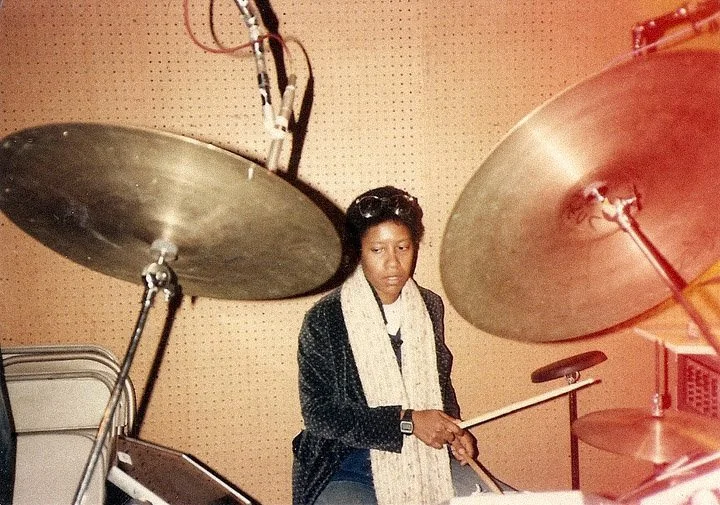
LINER NOTE LEGEND: Ms. Bobbye Hall

If you’ve followed us over the past months, you may remember that Cue the Record covered two albums: Marvin Gaye’s I Want You and Carole King’s Fantasy. There’s a throughline here we’ve talked about before, and that throughline is Bobbye Hall.

Bobbye Hall’s story begins in the postwar musical landscape of Detroit, a city whose sound helped define American popular music in the second half of the 20th century. By the time Motown was becoming a cultural force, Detroit had already become a proving ground for extraordinary talent, and Hall entered that world as a young percussionist with uncommon instinct and discipline. She was part of a generation of musicians who learned that session work demanded more than technical skill; it required taste, speed, adaptability, and the ability to serve a song without drawing attention away from it.

That historical moment matters. The 1960s and 1970s were a period when the role of the session musician was both essential and under-acknowledged. Records were becoming more ambitious, more layered, and more genre-fluid, and artists increasingly relied on players who could move between soul, pop, folk, rock, and jazz without losing the thread. Hall was exactly that kind of musician. Her percussion can be heard across records by Marvin Gaye, Carole King, Stevie Wonder, Bob Dylan, and Joni Mitchell, placing her at the center of a remarkably wide musical landscape.

Her work connected her to some of the defining artists of that era, including Marvin Gaye, Stevie Wonder, Carole King, Bob Dylan, and Joni Mitchell. Those names point to the breadth of her career, but they also show how central percussion had become to the emotional language of popular music. Hall understood that a song’s power often lived in its smallest details: the shimmer of a tambourine, the lift of a hand drum, the tension created by a perfectly placed accent. Her contributions were subtle, but they helped shape the atmosphere of some of the most enduring recordings of the period.

The phrase “liner-note legend” captures something important about Hall’s place in music history. She is part of a long tradition of musicians whose work is deeply felt but not always publicly celebrated. In the age before streaming made credits easy to forget, liner notes were one of the few places where listeners could trace the network of people behind a record. Hall’s name appears across those notes like a signature left in the margins of the era’s great albums, a reminder that popular music has always been collaborative at its core.

Her importance is also historical in another sense: Hall’s career unfolded in a male-dominated industry that rarely made room for women in visible technical roles, especially in the session world. She navigated that environment not by performing around it, but by mastering it. That kind of persistence gives her story lasting weight. It places her among the musicians whose careers quietly expanded what was possible for the people who came after them.

There is a tendency in music history to remember the voices at the center and overlook the hands that built the frame. Bobbye Hall deserves more than that. Her work sits at the intersection of craft, culture, and history, helping define the sound of records that helped define an era. She is not just a footnote to those albums; she is part of the reason they still resonate.

Bobbye Hall’s legacy reminds us that history is often made in the studio, one careful choice at a time. Her percussion may have been quiet, but its effect was lasting, and that may be the truest measure of influence in recorded music.

. . .

The Cue the Record Journal is a space to explore the stories, histories, and cultural threads woven into the music we gather around. If you’re interested in contributing a written piece, reflection, or critical response, email us at journal@cuetherecord.org. We’re always open to thoughtful voices and original perspectives.

 
Mustafa Ali-Smith

Mustafa Ali-Smith is a social justice advocate, organizer, and writer. In all of his work, he centers theories of community building, accountability, transformative justice, and stories of activists and organizers in his approach to driving change within and outside the criminal legal system.

https://mustafaalismith.com
Next
Next

Cue the Record x Def Jam: Revisiting Untitled by Nas